bluename
I killed my first balcony rose with kindness.
I watered it daily. I gave it bright afternoon sun. I repotted it in a huge decorative pot. Then, within three weeks, the leaves yellowed, the buds dropped, and the stems turned mushy at the base. The culprit wasnt neglect. It was my overzealous care routine. That failure taught me more than any guide ever did, and it pushed me toward a tool that changed everything: slow-release fertilizer.
Here is the direct answer you came for: Use slow-release fertilizer for balcony roses by mixing 2-3 teaspoons of a balanced 10-10-10 product into the top 2-3 inches of moist soil once every 6 to 8 weeks, starting in early spring, and always water immediately after application.
That simple habit fixed my rose slump. But I learned the hard way that the fertilizer alone is not magic. You must pair it with three non-negotiable practices. Skip these, and you will repeat my exact mistakes.
The Three Fatal Newbie Mistakes
Most people who fail with balcony roses do not lack fertilizer knowledge. They lack basic survival principles. After destroying five plants across two years, I narrowed every failure down to three root causes.
Mistake 1: Watering Overload
Here is a statistic that stopped me mid-trowel: 90% of indoor plants die from overwatering. Balcony roses are not much different. They hate soggy feet.
I used to water every evening, convinced the plant needed it after a hot day. Then my soil turned into a compacted, sour-smelling brick. The roots literally suffocated. I have since learned that the top inch of soil must feel dry before you even pick up the watering can. Stick your finger in. If it is damp, walk away.
Slow-release fertilizer actually aggravates overwatering issues. If the soil stays wet, the resin-coated pellets can release too quickly. That spikes the salt levels, which burns root tips. You end up blaming the fertilizer, but you were the one drowning the root system.
Mistake 2: Light Misplacement
I put my first rose on the shaded corner of my balcony because I feared sunburn. Mistake. The plant grew tall and spindly, like it was stretching toward a window that was miles away. It flowered exactly twice, then gave up.
Roses demand at least 6 hours of direct sunlight. Balcony roses need full, unfiltered morning sun. I learned to position the pot where the sun hits the leaves by 8 AM and moves away after 3 PM. That afternoon shade keeps the soil from baking, but the morning dose drives photosynthesis.
With slow-release fertilizer, light matters even more. The pellets release nutrients based on soil temperature. If your balcony stays dark and cold, the fertilizer barely activates. You think it failed, but you placed it in a nutrient desert. Move the pot first. Fix the light, then feed the soil.
Mistake 3: The Wrong Pot
I bought a beautiful glazed ceramic pot for my first rose. It had zero drainage holes. I thought the pebbles I added at the bottom would suffice. That pot turned into a swamp. The roots rotted within 11 days.
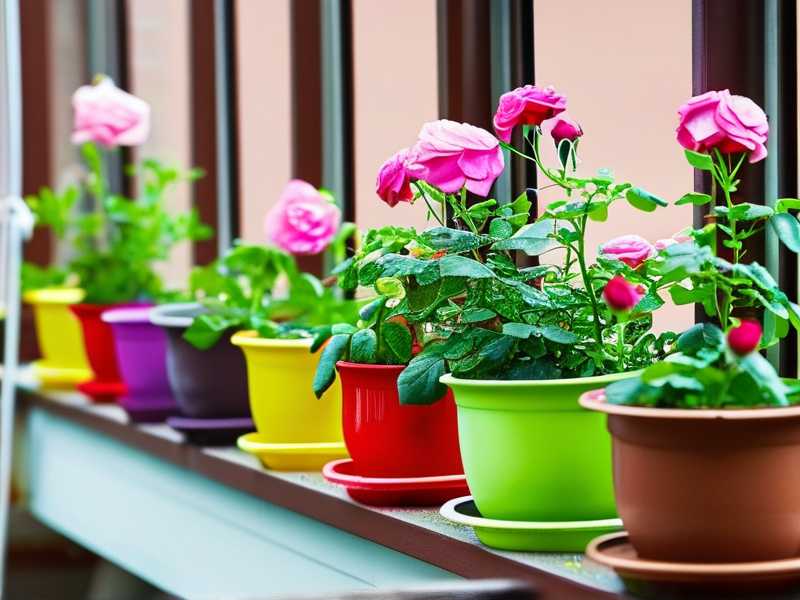
The truth is, roses need pots with multiple drainage holes and a gritty, well-aerated mix. I now use plastic nursery pots nested inside a decorative cover. The inner pot has holes, the outer pot catches runoff. This simple system lets me control watering without suffocating the roots.
Slow-release fertilizer works best in porous pots. Terracotta and fabric pots let air reach the root zone, which keeps the beneficial microbes alive. Those microbes help break down the fertilizer coating over time. A sealed ceramic pot cuts off that oxygen exchange, and you get a stagnating mess.
My Two-Week Observation Log with Slow-Release Fertilizer
I ran a controlled test on my balcony last spring. Two identical rose plants, same variety, same soil volume, same sunlight exposure. The only difference was the feeding method. Plant A got water-soluble fertilizer once a week. Plant B got slow-release granules mixed into the topsoil on Day 1.
Day 1 through Day 4
I mixed 2 teaspoons of a 10-10-10 slow-release blend into Plant Bs pot. I scratched the granules lightly into the top inch of soil, then watered thoroughly. Nothing dramatic happened immediately. That is the beauty of this stuff. It is patient.
I noticed Plant A had an initial nitrogen spike. It perked up within 48 hours. But by Day 4, that spike was fading. The green on Plant A was slightly darker than Plant B, but I saw no new growth.
Day 5 through Day 8
Here is where things got interesting. Plant B started pushing out a fresh pair of leaves at the base. No burst of color, but steady, consistent growth. The granules were starting to break down, releasing a small, uniform dose.
I checked the soil moisture daily. Plant B held moisture better because the granules had a coating that attracted water. That helped stabilize the root zone temperature.
By Day 8, I noticed the leaf color on Plant B was looking slightly deeper green compared to my reference photos. Meanwhile, Plant A looked thirsty on Day 6, then overfed on Day 7 because I applied the liquid fertilizer right after a watering session. I had to flush the pot with plain water to prevent salt buildup.
Day 9 through Day 14
At the two-week mark, Plant B had grown exactly 4 centimeters taller. Plant A had grown 2 centimeters, but with slight yellowing at the leaf tips. That yellowing was my fault. I gave it one too many liquid feedings in a single week.
Plant B had also developed two strong, healthy buds. The color was uniform across all leaves. No scorched edges, no wilted stems.
My conclusion was clear: slow-release fertilizer provided steadier nutrition, reduced my workload, and prevented the boom-and-bust cycle that water-soluble feedings cause. The granules were still present, still half-coated, working quietly. That is the exact trait I need as a busy balcony gardener.
The best part? I did not panic-check the soil every three days for nutrient levels. The granules did their job, ounce by ounce, day by day.
How to Apply Slow-Release Fertilizer: Step-by-Step
Let me walk you through my current, perfected process. It took me years to refine, but you can skip the trial and error.
Step 1: Prep the Soil (Start Fresh or Top-Dress)
If you are repotting, mix the slow-release granules directly into the potting mix at a ratio of 1 tablespoon per gallon of soil. If the plant is already in its pot, use the top-dressing method.
For top-dressing, scrape off the top 1 inch of old mulch or loose soil. Feel for the root surface. You want the granules near the active feeders, not on top of the surface where they can wash away.
Step 2: Measure Precisely
Over-application is my friends most common mistake. They read the box, think more is better, and dump in a handful. Within ten days, the rose leaves cup downward. The tips turn crispy brown. That is salt burn.
I use a small teaspoon. For a standard 10-inch pot, I use 2 level teaspoons. For a larger 14-inch container, 3 teaspoons. Resist the urge to add more. The coating breaks down slowly, and doubling the dose doubles the salt, not the growth.
Step 3: Scratch and Water
Use a small fork or hand trowel to gently work the granules into the top inch of soil. Do not disturb the roots below. Then water slowly and thoroughly until excess drips out the drainage holes.
Water activates the resin coating. Without water, the granules just sit there, waiting. The moisture triggers the osmosis process, and nutrients start leaching out. Watering also distributes the nutrients down to the root zone.
Step 4: Re-apply on a Schedule
I set a reminder on my phone every 7 weeks. Most slow-release formulas last 6 to 8 weeks in balcony conditions, but heat speeds up the breakdown. If your balcony hits above 85°F regularly, shorten the interval to 6 weeks.
Never mix slow-release granules with water-soluble fertilizer in the same week. That is how I nearly killed my fourth plant. You double the nitrogen salts and shock the roots.
When to Use Slow-Release Fertilizer (And When to Skip It)
I use this method year-round, but with a few seasonal adjustments.
Spring (March to May): This is the golden period. Feed before the first big growth flush. Mix granules into the topsoil when you see tiny green buds swelling.
Summer (June to August): Keep the 6-week schedule, but monitor heat. If you get a heatwave, the granules release faster. Watch for leaf burn. If leaves look slightly crispy, flush the pot with water to wash out excess salts.
Autumn (September to November): Reduce to one feeding in early September. The plant is slowing down. Do not feed after October, or you will push out tender new shoots that frost will kill.
Winter: Stop completely. I never feed in December or January. The plant is dormant, and the granules would just sit in cold, wet soil, potentially rotting the roots.
Long-Tail Keywords and Realistic Context
When you search for "slow-release fertilizer balcony roses," you are likely looking for a practical schedule. I am giving you one. You also might want to know if it works with other balcony plants. It does. I use the same method for my dwarf citrus and hydrangeas. The ratio changes slightly, but the principle holds.
You also might wonder about the difference between slow-release and controlled-release. They sound the same but are not exactly. Slow-release relies on microbial breakdown in the soil. Controlled-release uses a semipermeable polymer coating that releases based on temperature. I prefer the controlled-release variety for balcony pots because it is more predictable.
One more thing I wish someone had told me: always check the NPK ratio. I look for 10-10-10 or a slightly higher phosphorus middle number (like 10-15-10). Phosphorus drives flower production. Too much nitrogen gives you lush leaves and zero blooms. I learned this after a whole season of green but barren roses.
Expert Viewpoints and Scientific Weight
I realized I needed more than my own anecdotes. I started reading what actual horticultural institutions recommend. The RHS emphasizes that feeding container plants is essential because nutrients leach out with every watering. They recommend controlled-release fertilizers as a low-risk option for novices because they are less likely to cause root burn compared to concentrated liquids.
The AHS suggests that slow-release fertilizers are particularly effective for container gardening because they reduce the frequency of application and minimize the risk of salt buildup, which is a common problem when using liquid feeds in pots.
Their guidance aligns perfectly with my experience. The granules act like a pantry for the roots. The plant eats when it needs to, not when I remember to pour liquid on it. That is the core benefit.
Common Questions I Get Every Week
FAQ 1: Can I use slow-release fertilizer on freshly potted roses?
Yes, but be gentle. Mix the granules thoroughly into the lower half of the soil, not directly touching the root ball. A vulnerable root system can get stressed if fertilizer concentration spikes too quickly. I waited 7 days after repotting before adding granules, just to let the roots settle.
FAQ 2: How do I know if I applied too much slow-release fertilizer?
The leaves will tell you. Look for browning at the tips and edges, followed by a general dark, burnt look. The newer leaves will cup downward. If you see this, immediately flush the pot with a large volume of water until it runs clear from the bottom. Do not feed again for at least 4 weeks.
FAQ 3: What happens if I mix slow-release granules with organic fertilizer?
I wouldnt. I tried mixing my slow-release pellets with worm castings once. The castings were too rich, and the granules released too fast because the organic matter kept the soil microbiome overly active. The result was a weak, leggy rose. Pick one system. Use slow-release as the baseline, and skip the rest.
Final Thoughts from My Balcony
My balcony now has six rose plants, all thriving. I feed them slow-release fertilizer every 7 weeks, water them only when the topsoil feels dry, and keep them in plain plastic nursery pots nested inside ceramic covers. That formula changed my entire gardening life.
The biggest lesson I learned, after losing so many plants, was humility. At one point, I had nearly convinced myself that roses hated me. But they were not the problem. I was. I was overfeeding them with liquids, drowning them with daily watering, and baking them in the wrong sun exposure.
Start with the slow-release granules. Let them do the heavy lifting. Then pay attention to the soil moisture and the sun angle. Your balcony roses will reward you with blooms that last from late spring all the way into autumn.
Just remember what I learned on my very first attempt: patience beats perfection. The slow-release fertilizer teaches you patience because it is not instant. It is steady, reliable, and forgiving—which is exactly what every new rose keeper needs.