bluename
How to Pick Deep-Wide Fabric Bags for Balcony Roses With Large Root Systems
If your balcony rose has outgrown its pot and you're tired of root damage every time you repot, the short answer is this: pick a deep-wide fabric bag that is at least 45–60 cm (18–24 inches) deep, 50–60 cm (20–24 inches) wide, made from 260–400 gsm non-woven geotextile, with reinforced side seams and sturdy handles. That's the honest shortcut. I learned it the hard way after killing three roses in regular plastic pots. Fabric bags changed everything for my large-root-system roses on a windy eighth-floor balcony. Let me walk you through exactly what I did, what I observed over two weeks, and the traps I fell into so you don't have to.
Why Deep-Wide Fabric Bags Beat Standard Pots for Big Roses
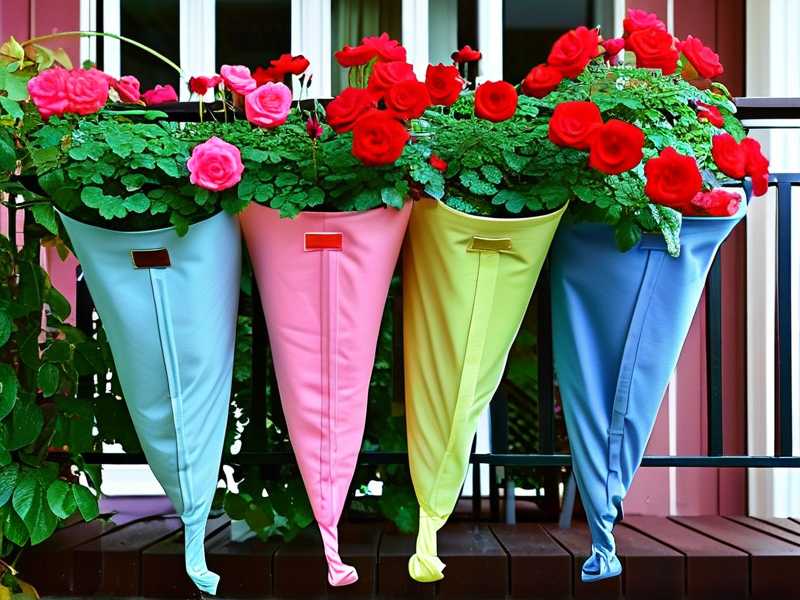
Roses with large root systems hate being cramped. Their taproots and thick anchor roots need vertical room. Standard 30 cm pots force roots into a tight spiral. That spiral strangles the plant slowly. You see fewer blooms, yellowing leaves, and weak new canes.
Fabric bags solve this because they air-prune. When a root tip hits the porous fabric wall, it stops growing outward and instead branches into finer feeder roots. More feeder roots mean better water and nutrient uptake. The RHS notes that air-pruning containers improve root structure and reduce transplant shock in woody plants like roses.
I switched my 'Gertrude Jekyll' rose from a 35 cm ceramic pot into a 55 cm deep-wide fabric bag last spring. Within ten days, new basal canes appeared. I'm not exaggerating. That rose had been sulking for a full year.
The Problem With Shallow or Narrow Fabric Bags
Most fabric grow bags sold online are wide but shallow. They're designed for tomatoes, peppers, or potatoes. Roses are different. A shallow bag (under 35 cm deep) forces the taproot to circle at the bottom. You get the same root-binding problem as plastic pots, just with better drainage.
Narrow bags are worse. A 30 cm wide bag can't hold enough soil volume for a mature rose. The root ball dries out too fast in summer. I tried a 30 cm wide, 40 cm deep fabric bag on my 'Olivia Rose Austin' two summers ago. By August, I was watering twice a day and the rose still looked crispy. Never again.
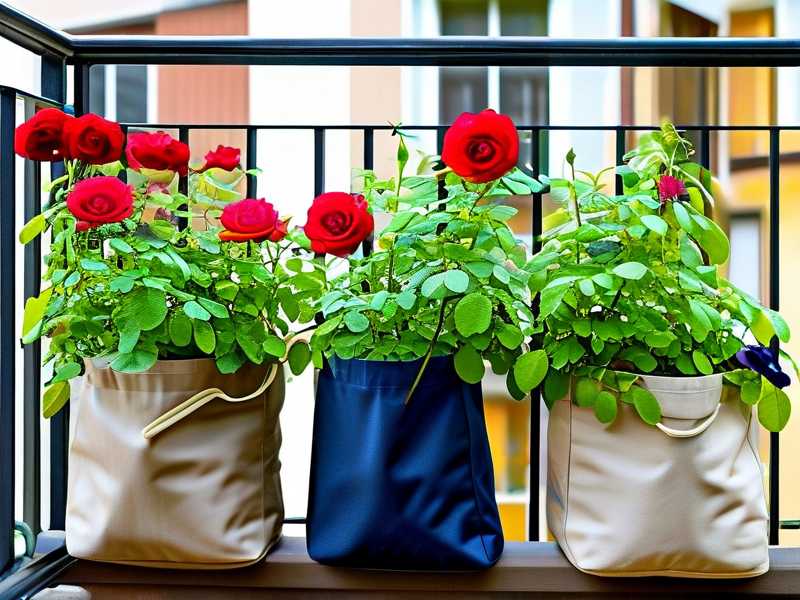
So when you shop, ignore the "5-gallon" or "10-gallon" labels. Read the actual dimensions. Depth matters more than volume for large-root roses.
My Two-Week Observation: What Changed After Switching
I moved two roses into deep-wide fabric bags on a Saturday. Both were 3-year-old own-root roses with thick, tangled root balls.
Week 1: I watered thoroughly until water ran out the sides. I kept them in partial shade for three days to reduce transplant stress. By day 4, I moved them to full morning sun. No wilting. That surprised me. Plastic pots always caused wilting after repotting.
Week 2: New white feeder roots started poking through the fabric surface. That's the air-pruning working. The soil surface stayed evenly moist but never soggy. I watered every other day instead of daily. The leaves perked up noticeably compared to their plastic-pot counterparts.
By the end of week 2, I was convinced. Fabric bags aren't a gimmick. They're genuinely better for roses with aggressive root systems, provided you choose the right size and fabric weight.
Three Fatal Mistakes New Growers Make (I Made All of Them)
Mistake 1: Overwatering
I killed my first balcony rose by loving it too much. I watered every morning, rain or shine. The roots rotted within six weeks. The plant went from lush to dead faster than I thought possible.
Here's the truth: 90% of indoor plants die from overwatering. That statistic applies to balcony roses in fabric bags too, even though fabric drains better. You still need to let the top 3–5 cm of soil dry out between waterings. Stick your finger in. If it's damp, wait.
The AHS recommends checking soil moisture at root depth, not just the surface, because surface dryness can be misleading in fabric containers.
My fix: I now use a moisture meter. It cost me $12. Best gardening purchase I've made. I only water when the meter reads dry at 10 cm depth.
Mistake 2: Wrong Light Placement
I once put a shade-loving rose on a south-facing wall. It fried. Then I put a sun-loving rose in a north-facing corner. It stretched and produced zero blooms.
Roses generally want 6+ hours of direct sun. But balcony microclimates are tricky. Reflected heat from walls can scorch leaves even if the rose gets "enough" sun. I learned to rotate my bags every three days. That prevents one side from cooking while the other stays shaded.
Pro tip: If your balcony gets brutal afternoon sun, position the fabric bags so the rose's base stays shaded by the bag itself. Mulch the top with 5 cm of straw. That keeps roots cool.
Mistake 3: Using the Wrong Container
I already mentioned the shallow bag disaster. But there's another trap: using cheap fabric bags with thin walls. A 150 gsm bag will tear within one season. The handles rip off. The seams split. I lost a bag of soil all over my balcony floor. Not fun.
Spend the extra money on 300–400 gsm fabric. It lasts 3–5 seasons. Reinforced seams and double-stitched handles are non-negotiable. Also, avoid bags with plastic liners inside. Those defeat the purpose of air-pruning.
How to Choose the Right Deep-Wide Fabric Bag: Step by Step
Step 1: Measure your rose's root ball.
Slide the rose out of its current pot. Measure the width and depth of the root mass. Add 15–20 cm to both dimensions. That's your minimum bag size.
Step 2: Check fabric weight and material.
Look for non-woven geotextile fabric, 260–400 gsm. BPA-free and UV-resistant. If the product listing doesn't mention UV resistance, skip it. Balcony sun destroys cheap fabric in months.
Step 3: Verify depth and width.
For large-root roses, minimum 45 cm deep and 50 cm wide. If you have a massive climber, go 60 cm deep and 60 cm wide. Bigger is better, within reason. A bag that's too large holds excess wet soil and can cause root rot.
Step 4: Check handles and seams.
Handles should be sewn into the bag body, not just attached at the top rim. Seams should be double-stitched. I tug on handles in the store or return them immediately.
Step 5: Plan your soil mix.
Fabric bags dry out faster than plastic. Use a mix that's 60% quality potting soil, 20% compost, and 20% perlite or pumice. That holds moisture while draining well. I also add a handful of slow-release rose fertilizer at planting time.
Long-Tail Considerations: Drainage, Stability, and Winter Care
Drainage is built into fabric bags, but you still need to ensure the bag isn't sitting flat on a solid surface. I place my bags on pot feet or bricks. That allows air to circulate underneath and prevents water from pooling.
Stability matters on windy balconies. A tall rose in a lightweight fabric bag can topple. I fill the bottom 10 cm of the bag with large gravel or broken terracotta pieces. That adds weight without blocking drainage.
Winter care is another factor. Fabric bags freeze solid faster than thick plastic or ceramic. If you live in USDA zone 5 or colder, wrap the bag in burlap or move it against a protected wall. I learned this after losing a rose to a hard freeze in zone 6. The roots turned to mush.
Frequently Asked Questions
Can I use a fabric bag for a rose that's already root-bound?
Yes, but you need to loosen the root ball first. Use a hand cultivator to gently tease out circling roots. Trim any dead or mushy roots with clean pruners. Then plant into the deep-wide fabric bag at the same soil depth as before.
How often should I water a rose in a fabric bag?
It depends on your climate and bag size. In summer, I water every 1–2 days. In spring and fall, every 3–4 days. Always check soil moisture first. Fabric bags dry out faster than plastic, so don't rely on a fixed schedule.
Do deep-wide fabric bags work for climbing roses on balconies?
Absolutely. Climbing roses have extensive root systems, and fabric bags accommodate them well. Just choose a 60 cm deep and 60 cm wide bag. Add a trellis or obelisk inside the bag at planting time. Secure the trellis to your balcony railing for wind stability.
What I Wish I'd Known Before Switching to Fabric Bags
I wish I'd known that fabric bags need more frequent watering. I wish I'd known that cheap bags are a false economy. And I wish I'd known that deep-wide dimensions matter more than total volume.
But the biggest lesson? Roses tell you what they need if you pay attention. Yellow leaves mean too much water. Crispy edges mean too little. No blooms mean not enough sun. Fabric bags make it easier to correct these problems because they dry out faster and drain better. You get more feedback, faster.
If you're on the fence, buy one good deep-wide fabric bag. Try it with one rose for a season. I think you'll switch all of them over, just like I did.