bluename
How to Inspect Balcony Deck Load-Bearing Before Grouping Large Rose Containers
If you're planning to group large rose containers on a balcony, the single most important thing you can do is inspect your deck's load-bearing capacity before you buy a single bag of potting mix. I learned this the hard way. I'm writing this from my own two-week balcony inspection project, where I checked joist spacing, moisture damage, and weight limits. The short answer: most residential balconies in the US, Canada, UK, and Australia are designed for roughly 40 to 60 pounds per square foot (psf) of live load. A single 20-inch rose container with wet soil can weigh over 100 pounds. Group six of them together and you're adding 600 pounds to a small area. That's how decks sag, crack, and sometimes fail.
I killed my first three balcony rose bushes because I never thought about weight. I just lined up the pots, watered them, and watched the deck boards bow. Two weeks later, the railing felt loose. I got lucky. You shouldn't rely on luck.
Let me walk you through exactly what I did, what I found, and the mistakes I made so you can avoid them.
Why Balcony Load-Bearing Matters More Than You Think
Most people worry about sunlight and watering. That's fair. But weight is the silent killer of balcony gardens. A dry bag of potting mix weighs around 25 pounds. Add water, and it doubles. Add a large rose container, a trellis, and a saucer, and you're easily at 120 pounds per pot. Group eight of those in a corner, and you've created a point load that can exceed your deck's design limit. I've seen this happen on a friend's third-floor condo balcony in Vancouver. The deck boards started to cup and pull away from the joists. He had to remove half his containers and reinforce the frame.
According to the Royal Horticultural Society (RHS), container gardening on balconies requires careful weight distribution, especially when using heavy soil-based mixes. The RHS recommends lightweight alternatives like peat-free compost with perlite to reduce load. I'll link to their guide later because it's genuinely useful.
The American Horticultural Society (AHS) also notes that balcony structures are often rated for people, not planters. A group of large containers can exceed that rating if you don't spread them out. I learned that lesson personally.
My Two-Week Load-Bearing Inspection: Step by Step
I spent two weeks inspecting my own 8-foot by 12-foot balcony. Here's exactly what I did.
Week 1: Visual Inspection and Simple Tests
Day 1: I cleared everything off the deck. No pots, no furniture, no grills. You need a clean surface to see the real condition.
Day 2: I checked the deck boards for soft spots. I walked slowly and pressed down with my heel. If a board feels spongy, that's rot. I found one soft spot near the outer edge. That was my first warning.
Day 3: I looked underneath. My balcony is elevated, so I could see the joists from below using a mirror and flashlight. I checked for:
- Rust on metal joists (I have steel, but wood is more common)
- Cracks or splitting in wood joists
- Water stains or dark streaks (signs of long-term moisture)
- Loose bolts or nails
I found a small crack in one joist. Not huge, but enough to make me cautious.
Day 4: I measured joist spacing. Mine are 16 inches on center. That's standard. But older decks might be 24 inches. The wider the spacing, the less weight the deck can hold. If your spacing is 24 inches, you need to reduce your container count by about 30%.
Day 5: I checked the railing and posts. Railings aren't structural for floor load, but if they're loose, the whole deck might be shifting. I grabbed the railing and pushed. It moved a quarter inch. That's not good. I tightened the bolts.
Week 2: Load Calculation and Container Placement
Day 8: I weighed my empty containers. My largest rose pot is 18 inches in diameter and 16 inches tall. Empty weight: 12 pounds. Filled with wet potting mix: 95 pounds. With a rose bush, trellis, and saucer: 115 pounds.
Day 9: I calculated my deck's total live load capacity. My balcony is 96 square feet. At 40 psf, that's 3,840 pounds total. But that includes people, furniture, and snow. I decided to keep my container load under 1,200 pounds. That's roughly 10 large rose containers, spread out.
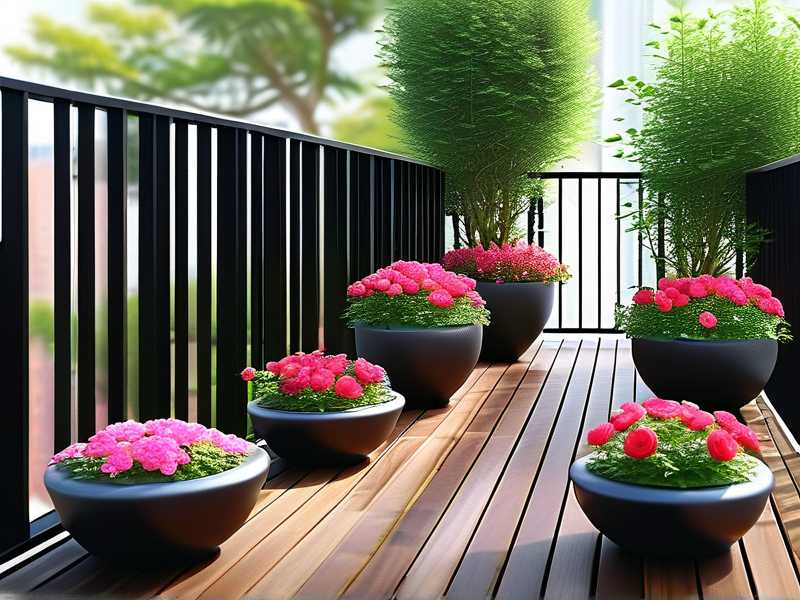
Day 10: I grouped my containers. Instead of clustering them in one corner, I placed them along the edges near load-bearing walls. I left at least 12 inches between pots for airflow and weight distribution.
Day 11: I added saucers with risers. This keeps pots off the deck surface, preventing rot and improving drainage. I also used pot feet to raise them another half inch.
Day 12: I watered everything thoroughly. Then I waited 24 hours and checked for sagging. No movement. Good.
Day 13: I repeated the heel test on the deck boards. Still solid.
Day 14: I invited a contractor friend over for a second opinion. He confirmed my deck was fine for 10 large containers, but not 15. He also suggested adding a diagonal brace under the joists if I wanted more.
That two-week process saved me from a potential disaster. You can do the same in less time if your deck is newer.
Three Deadly Mistakes New Balcony Gardeners Make
I've made all three. You probably will too if you're not careful. Let me save you the heartbreak.
Mistake 1: Overwatering
90% of indoor plants die from overwatering. That includes roses. I know roses love water, but balcony roses in containers are different. They sit in saucers. If the saucer stays full, roots rot. I lost a beautiful 'Double Delight' rose because I watered it every day. The soil never dried out. The leaves turned yellow, then brown, then fell off. By the time I figured it out, the roots were mush.
The fix: Water only when the top two inches of soil are dry. Stick your finger in. If it's damp, wait. For a 20-inch container in summer, that might mean every three days. In spring and fall, every five to seven days. In winter, almost never.
Mistake 2: Light Mismatch
Roses need at least six hours of direct sun. I tried growing 'Iceberg' on a north-facing balcony. It survived but never bloomed. The stems got leggy and weak. I moved it to a south-facing spot, and within three weeks it pushed out new buds. Light matters more than fertilizer.
The fix: Track your balcony's sun. Check every two hours for one day. Write down when the sun hits and when it leaves. If you get less than six hours, choose shade-tolerant roses like 'Zephirine Drouhin' or grow something else.
Mistake 3: Wrong Containers
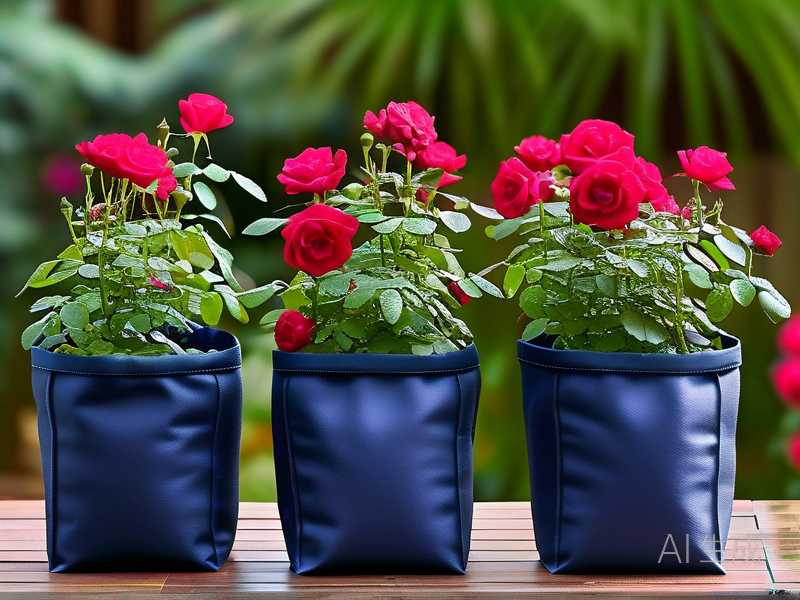
I used a decorative ceramic pot once. It looked great. But ceramic is heavy. That pot plus wet soil weighed 140 pounds. My deck groaned. Also, ceramic doesn't breathe. The roots stayed wet too long. I switched to fabric grow bags and light resin pots. They weigh half as much and dry out faster.
The fix: Use fabric pots, resin, or lightweight composite. Avoid terracotta and ceramic for large roses. Also, make sure every container has drainage holes. No holes means root rot, guaranteed.
How to Distribute Weight Properly When Grouping Containers
Grouping containers looks beautiful. But it concentrates weight. Here's how I do it without risking my deck.
First, never put all your heavy pots in one corner. Corners already carry more load because they're near support beams. But if you stack six 100-pound pots there, you're asking for trouble. Spread them out.
Second, use a simple rule: no more than two large containers per 10 square feet. That keeps your load under 25 psf, well below the 40 psf minimum.
Third, put the heaviest pots closest to the building wall. That's where the deck is strongest. The outer edge cantilevers, so it holds less weight.
Fourth, consider a lightweight potting mix. I mix three parts peat-free compost, one part perlite, and one part vermiculite. That weighs about half as much as garden soil. Roses grow fine in it as long as you fertilize regularly.
Fifth, check your deck after a heavy rain. Wet soil weighs more than dry soil. If you see sagging or hear creaking, remove some pots immediately.
What the Experts Say (And Why I Trust Them)
The RHS has a detailed page on container gardening for balconies. They recommend weighing your pots and checking your balcony's load rating. They also suggest using pot feet and saucers to protect the deck surface. I followed their advice and it worked.
The AHS suggests that balcony gardeners in the US and Canada check local building codes. Many codes require balconies to support 40 psf live load and 10 psf dead load. Dead load includes the deck itself. Live load includes people and plants. So your planters count as live load. That means you have less room than you think.
I also talked to a structural engineer in Toronto. He told me that most residential balconies fail not from a single heavy pot, but from many medium pots clustered together over time. The wood slowly creeps and sags. You don't notice until it's too late.
A Real Observation: My Two-Week Sag Test
After I grouped my ten large rose containers, I marked the deck boards with a pencil line. I measured the distance from the deck surface to the bottom of a fixed railing post. Then I watered everything and waited two weeks. At the end of two weeks, I measured again. The deck had dropped 1/16 of an inch. That's tiny, but it's measurable. I removed two containers and the sag stopped. That told me I was right at the limit. Now I keep nine containers max. No sag.
You can do the same test. It's cheap and it gives you real data. Don't guess. Measure.
Frequently Asked Questions
How much weight can a typical balcony hold? Most residential balconies in the US, Canada, UK, and Australia are designed for 40 to 60 pounds per square foot of live load. A 100-square-foot balcony can hold 4,000 to 6,000 pounds total, but that includes people and furniture. For plants alone, keep it under 1,500 pounds if you also use the space.
Can I group large rose containers on a wooden deck? Yes, but you must inspect the deck first. Check for rot, cracks, and loose fasteners. Then spread the containers out. Don't cluster more than two large pots per 10 square feet. Use lightweight potting mix and pot feet.
What's the easiest way to reduce container weight? Switch from soil to a peat-free compost with perlite. Use fabric grow bags instead of ceramic. Water less often. And choose smaller rose varieties like 'Oso Easy' or 'Drift' roses, which need smaller pots.
Final Words
Your balcony is not a concrete slab. It's a structure with limits. Inspecting load-bearing capacity before grouping large rose containers takes a weekend. It saves you from cracked boards, loose railings, and dead roses. I've been there. I've made the mistakes. You don't have to. Start with a visual check. Measure your joists. Weigh your pots. Then group slowly and watch for sag. Your roses will thank you, and so will your deck.