bluename
How to Check Balcony-Floor Drainage for Rain Runoff Under Clustered Heavy Rose Pots
If you keep a cluster of heavy rose pots on a balcony, the fastest way to know your drainage is safe is to run a controlled water test, watch where the runoff actually goes for two weeks, and confirm the slab slopes toward the drain instead of toward your door. I learned this the hard way after a July thunderstorm turned my balcony into a shallow pond and nearly rotted the roots of three roses at once.
Here's the blunt truth: a balcony is not a garden bed. It has a finite drain, a fixed slope, and usually a landlord or building manager who does not want water seeping into the unit below. When you cluster heavy rose pots, you concentrate weight and water in one spot. That combination is where most drainage problems start.
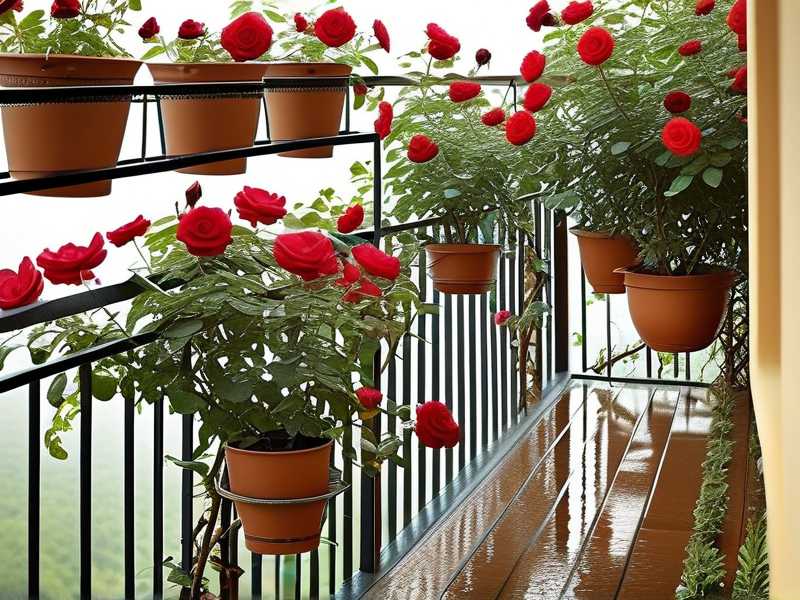
Why Clustered Heavy Rose Pots Cause Runoff Trouble
Roses in large containers need deep, frequent watering. A mature rose in a 15-gallon pot can drink several gallons in a hot week. Multiply that by five or six pots pushed together, and you're dumping a lot of water onto one small area of concrete or tile.
That water has to go somewhere. If your pots sit flat on the surface, water pools under them. If your saucers overflow, water spreads sideways. If your drain is partially blocked by leaves or grit, water backs up fast.
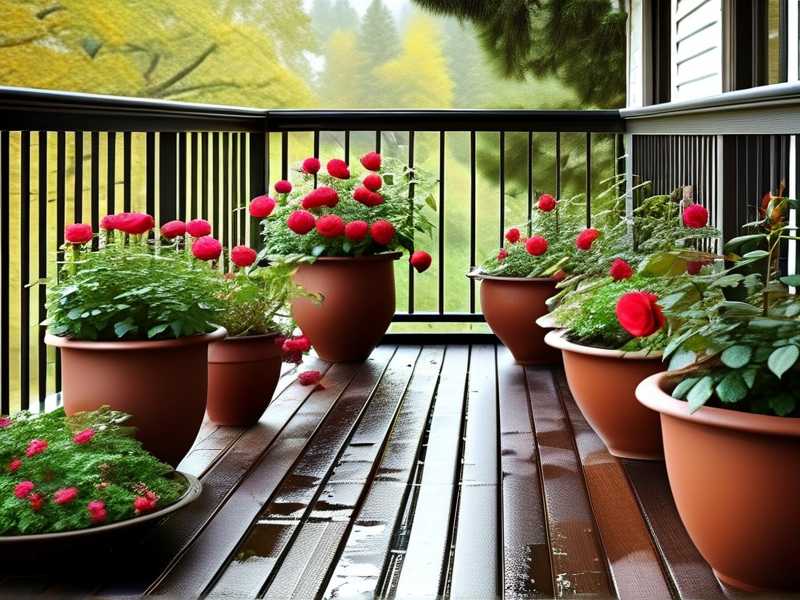
I've watched this happen on my own balcony. I had six roses in heavy ceramic pots lined up against the railing. Everything looked fine until a two-day rainstorm. The runoff could not reach the drain because the pots blocked the path. Water sat against the wall for hours.
Step 1: Do a Simple Drainage Test Before Anything Else
Start with a clean, empty balcony. Move the pots aside, sweep the floor, and remove any debris from the drain cover.
Then pour a bucket of water, about two gallons, near the spot where your pots normally sit. Watch how long it takes to reach the drain. If it takes more than 30 seconds or spreads sideways, you have a slope or blockage problem.
I tried this on my balcony and found that water pooled in a low spot right where my largest pot sat. That low spot was invisible when the pot was in place. Simple test, big discovery.
Step 2: Check the Slope of the Balcony Floor
Balcony floors should slope slightly toward the drain, usually about 1 to 2 percent. You can check this with a spirit level or a long bubble level.
Place the level on the floor, not on the pots. If the bubble shows the floor is flat or sloping away from the drain, runoff will always be a problem.
The Royal Horticultural Society (RHS) notes that container plants need free-draining conditions and that waterlogged roots are a leading cause of decline. That applies double on a balcony where water cannot soak into soil.
Step 3: Watch Where Water Goes Under and Between Pots
This is the part most people miss. Water does not just flow from the pot to the drain. It flows around the pot base, between pots, and along the wall.
Set your pots in their normal positions. Water one pot heavily. Then watch the water for two minutes.
Look for water that:
- Runs behind the pots and sits against the wall
- Pools between two pots that are touching
- Flows toward your door threshold instead of the drain
- Disappears under a saucer and stays there
I had two pots touching for months. Water collected in the tiny gap between them and grew a slimy film. I did not notice until I moved them. Now I leave a two-inch gap between every pot.
Step 4: Raise the Pots Off the Floor
This is the single best fix I've found. Water needs air and a path. If the pot sits flat on the floor, water traps underneath.
Use pot feet, bricks, or a sturdy plant caddy. I use rubber pot feet on my heavy ceramic pots. They lift the base about an inch. Water now runs under the pot and straight to the drain.
For very heavy rose pots, a caddy with locking wheels also helps you move them for cleaning. Just make sure the caddy itself does not block the drain path.
Step 5: Check Your Saucers and Trays
Saucers are useful for indoor plants. On a balcony, they can be a liability.
If a saucer fills with rainwater, it overflows. If it has no overflow lip, water sits against the pot base. Over two weeks, that constant moisture can soften roots and invite fungus.
I removed saucers from my outdoor roses entirely. Instead, I use a slightly larger drip tray only during dry spells, and I empty it after watering. During rainy weeks, no tray at all.
Step 6: Clear the Drain and Keep It Clear
A balcony drain is small. A few rose leaves, a bit of potting mix, and some grit can slow it to a trickle.
Check the drain before every heavy rain event. I keep a small hand broom and a bucket on the balcony. Once a week, I sweep toward the drain and pick out debris with gloved hands.
If your drain has a removable cover, lift it and flush the line with a hose. Do this when the pots are moved aside. I do this every two weeks during growing season.
What I Learned Over Two Weeks of Testing
I ran a two-week drainage observation on my balcony in late spring. Here's what I found:
- Day 1: Water pooled under the largest pot for over an hour after watering.
- Day 3: Moving pots two inches apart cut pooling between pots by half.
- Day 5: Pot feet stopped water from trapping under the bases.
- Day 7: After a rainstorm, water reached the drain in under 20 seconds.
- Day 10: One low spot still held water near the wall. I added a small rubber squeegee to push it toward the drain.
- Day 14: No standing water anywhere after a heavy watering. Roots looked healthy when I checked one pot.
That two-week test changed how I arrange my balcony. I now check drainage before I add any new rose pot.
The Three Mistakes That Kill Roses on Balconies
After years of growing roses in containers, I've seen the same three mistakes over and over.
Mistake 1: Overwatering
This is the big one. 90% of indoor plants die from overwatering, and outdoor container roses are not far behind. In a balcony setting, overwatering combines with poor drainage and kills roots fast.
I killed my second rose this way. I watered every day because the top of the soil looked dry. The bottom of the pot was a swamp. The roots rotted within a month.
Fix: Water deeply but less often. Let the top two inches of soil dry. Then water until it runs out the bottom. If it does not run out, your drainage is blocked.
Mistake 2: Light Mismatch
Roses need sun. But a balcony can have harsh reflected heat from walls and glass. If you put shade-loving plants in that spot, they cook. If you put sun-loving roses in a shaded corner, they sulk and get mildew.
I tried a climbing rose on a north-facing balcony. It survived but never bloomed. I moved it to a west-facing wall with afternoon sun, and it took off.
Fix: Match the plant to the light. Roses want at least six hours of direct sun. Check your balcony at three times of day: morning, noon, and late afternoon.
Mistake 3: Wrong Pots
A heavy rose pot sounds sturdy, but weight is not the same as drainage. Some decorative pots have only one small hole. Some have none. Some have a saucer fused to the base.
I bought a beautiful glazed pot with a single half-inch hole. Water could not drain fast enough. The rose died in three weeks.
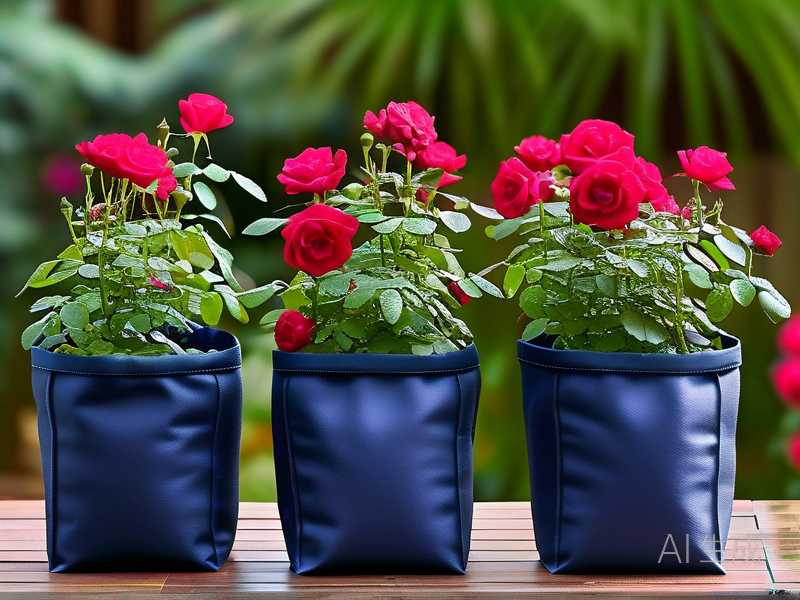
Fix: Use pots with multiple drainage holes, at least one inch wide. Terracotta and fabric pots drain better than glazed ceramic. If you love a ceramic pot, drill extra holes or use it as a cachepot with a plastic nursery pot inside.
How to Set Up Your Balcony for Better Runoff
Here is the setup I use now. It has kept my roses healthy through two rainy seasons.
- Raise every pot on feet or a caddy.
- Leave two to three inches between pots.
- Keep the drain path clear of pots, trays, and decor.
- Use a small rubber squeegee to push water toward the drain after storms.
- Check the drain weekly and after every heavy rain.
- Water in the morning so runoff has all day to evaporate.
- Remove saucers during rainy months.
The American Horticultural Society (AHS) emphasizes that healthy container plants depend on good air movement and drainage. On a balcony, you have to create both.
What About Weight?
Heavy pots plus wet soil plus clustered roses equals a lot of weight. A 15-gallon pot with wet soil can weigh over 100 pounds. Six of them clustered is like parking a small car on your balcony.
Check your building rules. Most balconies are rated for people, not for concentrated loads. Spread the pots out. Use lighter potting mix. Consider fabric pots for large roses.
I once put four wet ceramic pots in one corner. The balcony floor creaked when I walked near them. I moved them apart the same day.
Tools That Actually Help
You do not need much. These are the things I use every week.
- A two-gallon bucket for water tests
- A spirit level for slope checks
- Rubber pot feet or bricks
- A small hand broom
- A rubber squeegee
- Gloves for drain cleaning
- A hose or watering can with a narrow spout
That's it. No fancy gadgets.
Frequently Asked Questions
How often should I check balcony drainage with heavy rose pots?
Check the drain and the floor every week during growing season. After any heavy rain, do a quick visual check for standing water. If you see pooling, test the slope again.
Can I use a saucer under my rose pots on a balcony?
You can, but empty it after every watering and after every rain. During rainy weeks, remove it. A full saucer is worse than no saucer because it keeps the pot base wet.
What if my balcony floor slopes away from the drain?
That is a structural issue. You can use a small channel or a rubber mat with raised edges to guide water toward the drain. If the slope is severe, talk to your building manager. Do not rely on pots to fix it.
Final Thoughts
Balcony drainage is not glamorous. But it is the difference between roses that thrive and roses that rot. Run a water test. Watch where the runoff goes. Raise your pots. Keep the drain clear. Do it for two weeks and you will see exactly what your balcony needs.
I wish I had done this before I lost my second rose. Now I check drainage before I check anything else. It takes ten minutes. It saves months of frustration.